That specific craving that hits at 9pm on a Tuesday.
Not quite hunger. Not quite boredom. Just… noodles. 🍜
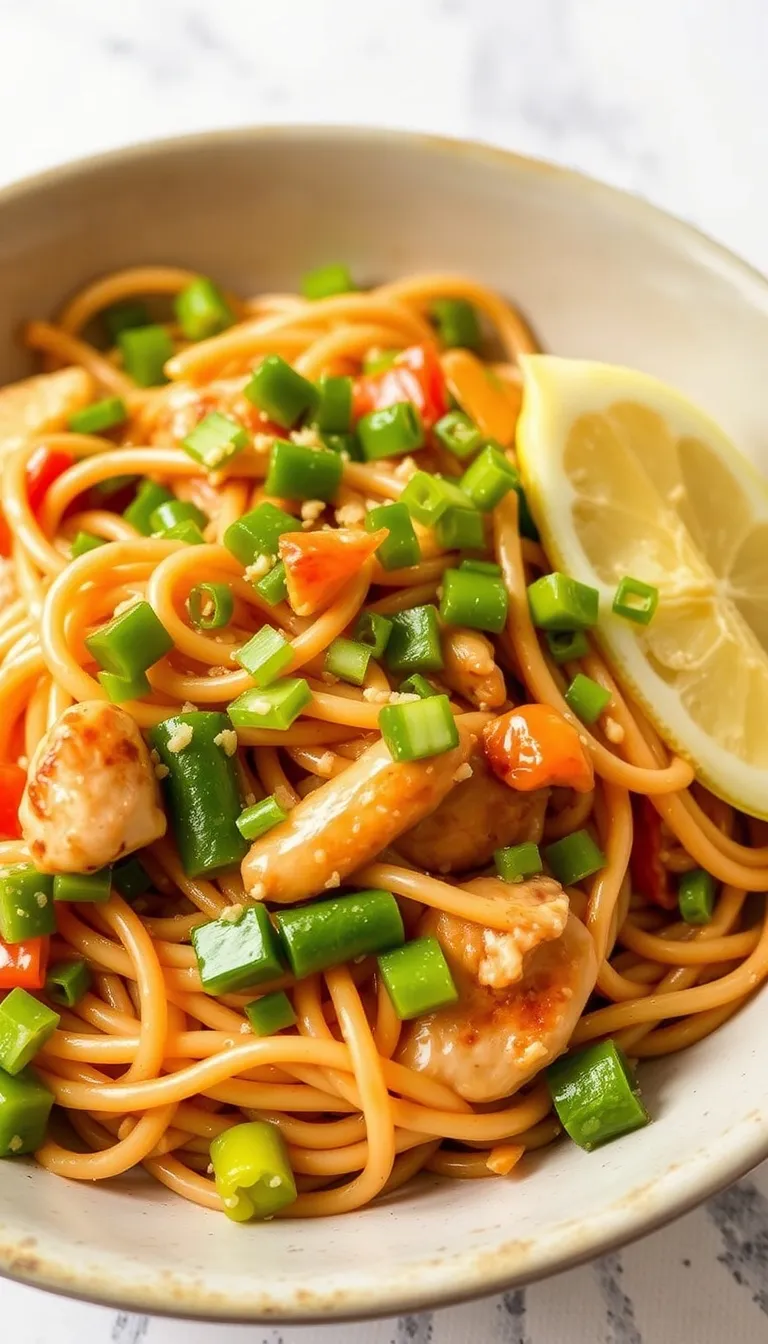
Here’s the thing most people don’t know: chicken lo mein is one of the easiest takeout dishes to recreate at home. One wok. Thirty minutes. A sauce so good you’ll want to put it on literally everything.
No mystery ingredients. No culinary school required.
And once you taste it fresh off a screaming hot wok? You’ll genuinely wonder why you ever ordered it.
Lo Mein vs. Chow Mein: What’s Actually the Difference?
People mix these up constantly. They are not the same dish.
| Lo Mein | Chow Mein | |
|---|---|---|
| Meaning | “Tossed noodles” | “Stir-fried noodles” |
| Noodle texture | Soft, chewy, saucy | Crispy, dry, golden |
| Cooking method | Noodles tossed in sauce | Noodles fried until crisp |
| Sauce absorption | High — noodles soak it up | Low — sauce is separate |
| Best for | Cozy, saucy comfort | Crunchy texture lovers |
Lo mein = soft and saucy. Chow mein = crispy and dry.
Now you’ll never mix them up again.
💡 Fun fact: Lo mein has been eaten in China for over 2,000 years — the noodle preparation dates back to the Han Dynasty. So making this on a random Wednesday night means you’re continuing a very long culinary tradition.
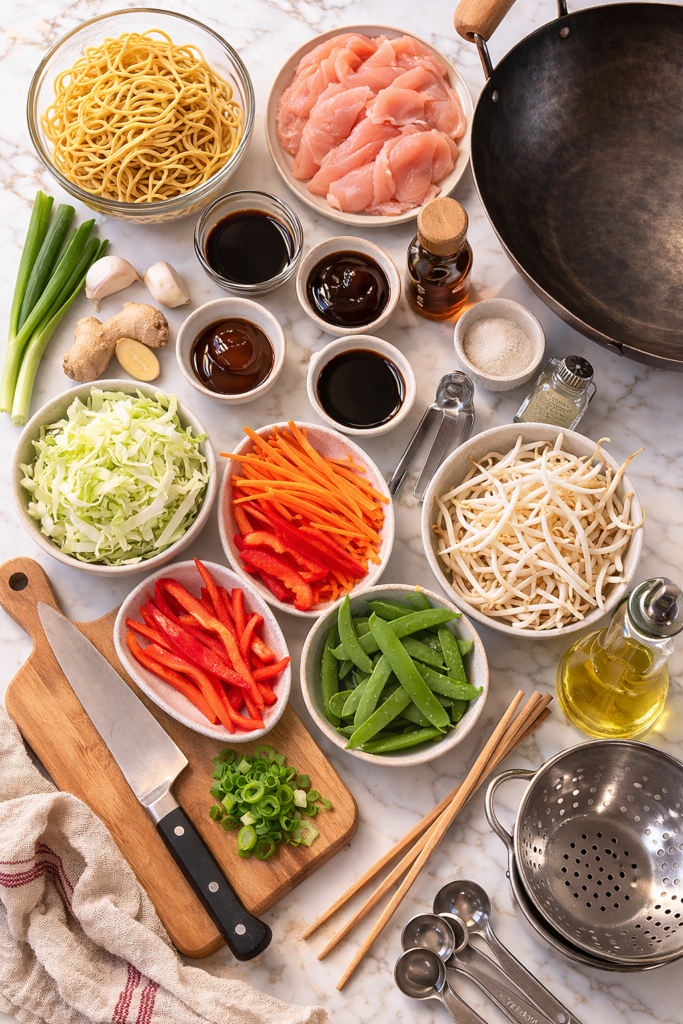
What You’ll Need
🍗 For the Chicken Marinade
- 1 lb boneless, skinless chicken breast or thighs, thinly sliced
- 1 tablespoon low-sodium soy sauce
- 1 teaspoon cornstarch
- 1 teaspoon sesame oil
🍜 For the Noodles
- 8 oz lo mein noodles (fresh or dried egg noodles)
- 1 tablespoon sesame oil (for tossing after cooking)
🥢 For the Sauce
- 3 tablespoons low-sodium soy sauce
- 2 tablespoons oyster sauce
- 1 tablespoon dark soy sauce
- 1 tablespoon hoisin sauce
- 1 teaspoon sesame oil
- 1 teaspoon sugar
- ½ teaspoon white pepper
🥦 For the Stir-Fry
- 2 tablespoons neutral oil (vegetable or avocado)
- 4 cloves garlic, minced
- 1 teaspoon fresh ginger, grated
- 1 cup shredded cabbage
- 1 medium carrot, julienned
- 1 red bell pepper, thinly sliced
- 1 cup snap peas
- 3 green onions, sliced (whites and greens separated)
- 2 cups bean sprouts
Tools You’ll Need
You may also like : chicken burger recipe
| Tool | Why You Need It |
|---|---|
| Large wok or 12-inch skillet | High heat, fast cooking, essential |
| Large pot | Boiling the noodles |
| Colander | Draining and rinsing noodles |
| Sharp knife + cutting board | Thin-slicing the chicken |
| 2 small mixing bowls | One for marinade, one for sauce |
| Tongs or chopsticks | Tossing everything together |
| Measuring spoons | Getting the sauce ratio right |
⚠️ No wok? A wide 12-inch skillet works. The key is surface area and high heat — not the pan itself.
Pro Tips
These are the details that separate good lo mein from great lo mein.
1. Slice the chicken thin — and against the grain We’re talking ¼ inch slices. Thinner cuts cook faster, stay tender, and absorb more sauce. Pop the chicken in the freezer for 15 minutes before slicing if it’s sliding around.
2. Never skip the marinade Even 10 minutes matters. The cornstarch creates a silky coating on the chicken that locks in moisture. Without it, the chicken turns dry and bland. Don’t rush this.
3. HIGH heat is non-negotiable This is the #1 mistake home cooks make with stir-fry. Lo mein needs intense heat to develop that slight smokiness restaurants have (called wok hei, or “breath of the wok”). Crank your burner to max.
4. Undercook your noodles by 1 full minute They keep cooking when you add them to the wok. Perfectly cooked noodles going in = mushy noodles on your plate.
5. Prep everything before you heat the pan Once the wok is hot, this dish moves in minutes. Sauce mixed, vegetables cut, chicken marinated — all of it ready before you turn on the burner.
The Sauce Breakdown
This is where all the flavor lives. Here’s exactly what each ingredient does:
| Ingredient | Role |
|---|---|
| Low-sodium soy sauce | The salty, savory base |
| Dark soy sauce | Deep color + rich, slightly sweet flavor |
| Oyster sauce | Umami depth and body |
| Hoisin sauce | Sweetness and complexity |
| Sesame oil | Nutty aroma (add at end, heat destroys it) |
| Sugar | Balances the salt |
| White pepper | Subtle heat, more floral than black pepper |
“The sauce is the soul of lo mein. Get this right and everything else falls into place.”
Substitutions & Variations
Protein Swaps
| Swap | Notes |
|---|---|
| Beef (flank steak) | Slice thin, same marinade |
| Shrimp | Add in the last 2 minutes only |
| Tofu (extra firm) | Press dry, cube, pan-fry first |
| No protein | Load up on extra mushrooms instead |
Noodle Swaps
| Swap | Best For |
|---|---|
| Spaghetti or linguine | When you have nothing else |
| Rice noodles | Gluten-free version |
| Udon noodles | Thicker, chewier bite |
| Zucchini noodles | Low-carb option |
Sauce Tweaks
- Want heat? Add 1 tsp chili garlic sauce or sriracha
- Vegan? Swap oyster sauce for mushroom sauce
- Nutty flavor? Stir in 1 tablespoon of peanut butter
- Less sodium? Use coconut aminos instead of soy sauce
Make-Ahead Tips
This dish is fast enough to make on a weeknight — but if you want even faster, here’s how:
| Prep Task | How Far Ahead |
|---|---|
| Mix the sauce | Up to 5 days in fridge |
| Slice + marinate chicken | Up to 24 hours in fridge |
| Cut all vegetables | Up to 2 days in fridge |
| Cook the noodles | Up to 1 day (toss with sesame oil to store) |
With everything prepped, this goes from fridge to table in under 15 minutes.
You’ll love these too : chicken breast recipe
Step-By-Step Instructions
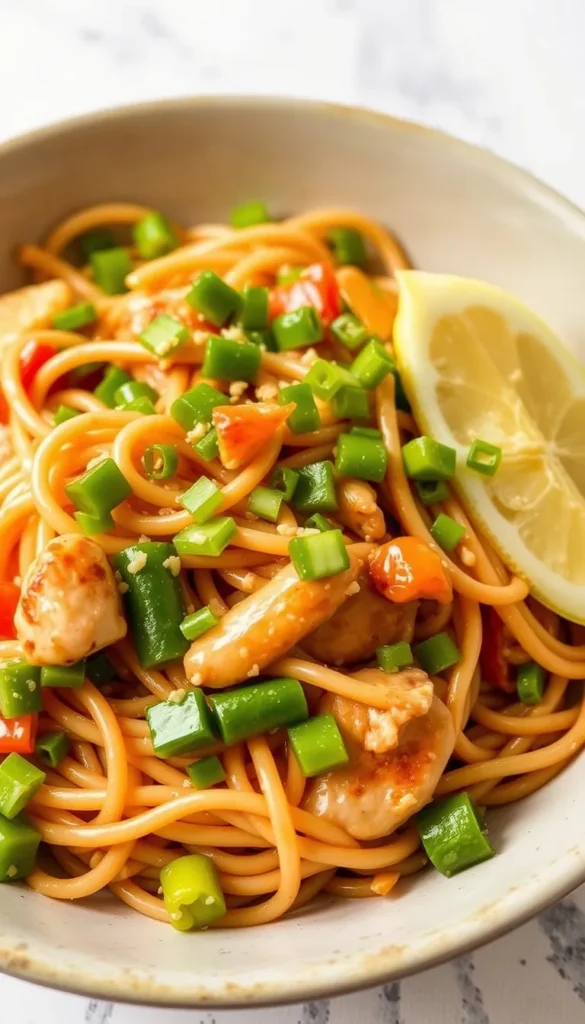
Total time: 30 minutes | Serves: 4
Step 1 — Marinate the Chicken (10 min)
Combine sliced chicken with soy sauce, cornstarch, and sesame oil. Toss well. Set aside while you prep everything else.
Step 2 — Mix the Sauce (2 min)
Whisk all sauce ingredients together in a small bowl. Set it right next to your stove — you’ll need it fast.
Step 3 — Cook the Noodles (5-6 min)
Boil noodles per package directions, but pull them 1 minute early. Drain, rinse under cold water, and toss with 1 tablespoon sesame oil to prevent sticking.
Step 4 — Sear the Chicken (4 min)
Heat 1 tablespoon oil in your wok over high heat until nearly smoking. Add chicken in a single layer — don’t stir it immediately. Let it sear 1-2 minutes, flip, cook another 1-2 minutes until golden. Remove and set aside.
Step 5 — Stir-Fry the Vegetables (4 min)
Add remaining oil to the wok. Add garlic, ginger, and green onion whites. Stir-fry 30 seconds until fragrant.
Add carrots and bell pepper first — they take longer. Cook 2 minutes, tossing constantly.
Add cabbage, snap peas, and bean sprouts. Toss another 1-2 minutes. You want tender but still with a slight crunch.
Recommended for you : merry me chicken recipe
Step 6 — Combine Everything (2 min)
Return chicken to the wok. Add noodles on top. Pour sauce over everything.
Toss with tongs or chopsticks until evenly coated. Keep heat on high — let it cook 1-2 more minutes.
Step 7 — Finish and Serve
Top with green onion greens. Serve immediately. That’s it. 🙌
Nutritional Breakdown
| Nutrient | Per Serving (approx.) |
|---|---|
| Calories | ~480 kcal |
| Protein | 34g |
| Carbohydrates | 52g |
| Fat | 14g |
| Fiber | 4g |
| Sodium | ~900mg |
Diet-Specific Swaps
| Diet | What to Change |
|---|---|
| Gluten-free | Rice noodles + tamari instead of soy sauce |
| Lower carb | Zucchini noodles or shirataki noodles |
| Lower sodium | Coconut aminos + reduce oyster sauce by half |
| Higher protein | Add extra ½ lb chicken or edamame |
| Vegan | Tofu + mushroom sauce instead of oyster sauce |
Meal Pairing Suggestions
Lo mein is a complete meal on its own, but if you want to build a full spread:
- Starter: Egg rolls or steamed dumplings
- Soup: Hot and sour soup or egg drop soup
- Side: Cucumber salad with rice vinegar and chili oil
- Drink: Jasmine tea, lychee lemonade, or sparkling water with lime
Leftovers & Storage
| Details | |
|---|---|
| Fridge | Airtight container, up to 4 days |
| Freezer | Not recommended — noodles turn mushy |
| Reheat (stovetop) | Medium heat + 2 tbsp water or broth, toss until warm |
| Reheat (microwave) | Cover, 60-second intervals, stir between each |
🍳 Leftover hack: Cold lo mein the next morning topped with a fried egg is genuinely one of the best breakfasts. Don’t knock it until you try it.
FAQ
Can I use regular spaghetti instead of lo mein noodles? You can. The texture won’t be identical — lo mein noodles are chewier and more elastic because of the egg content — but spaghetti works well with the same sauce.
My noodles always turn mushy. What am I doing wrong? Two things: overcooking them in the boiling water, and not having your wok hot enough. Pull them a full minute early and make sure your heat is on max when they hit the pan.
Can I double this recipe? Yes, but cook the protein and vegetables in two batches. Overcrowding the wok traps steam and you lose that high-heat sear.
Is this dish spicy as written? No — it’s savory with a slight sweetness. Add chili garlic sauce, sriracha, or red pepper flakes if you want heat.
What makes restaurant lo mein taste different from homemade? Two words: wok hei. Commercial gas burners run much hotter than home stoves. You can get close by using the highest heat possible, cooking in smaller batches, and using a carbon steel wok that holds heat well.
Can I make this gluten-free? Yes. Use rice noodles, tamari or coconut aminos instead of soy sauce, and swap oyster sauce for mushroom sauce. Same great flavor.
Wrapping Up
There’s a version of this dish sitting in a takeout bag right now. Overpriced. Slightly soggy. Made 45 minutes ago.
And then there’s this version — fresh off a hot wok, noodles perfectly coated, chicken actually tender, ready in 30 minutes, tasting exactly the way you wanted it to.
Make this once and it earns a permanent spot in your rotation. Not because you forced it — just because it’s that good.
Give it a try this week and drop a comment below. Tell me what swaps you made, how it turned out, or any questions you ran into. I read every single one. 👇