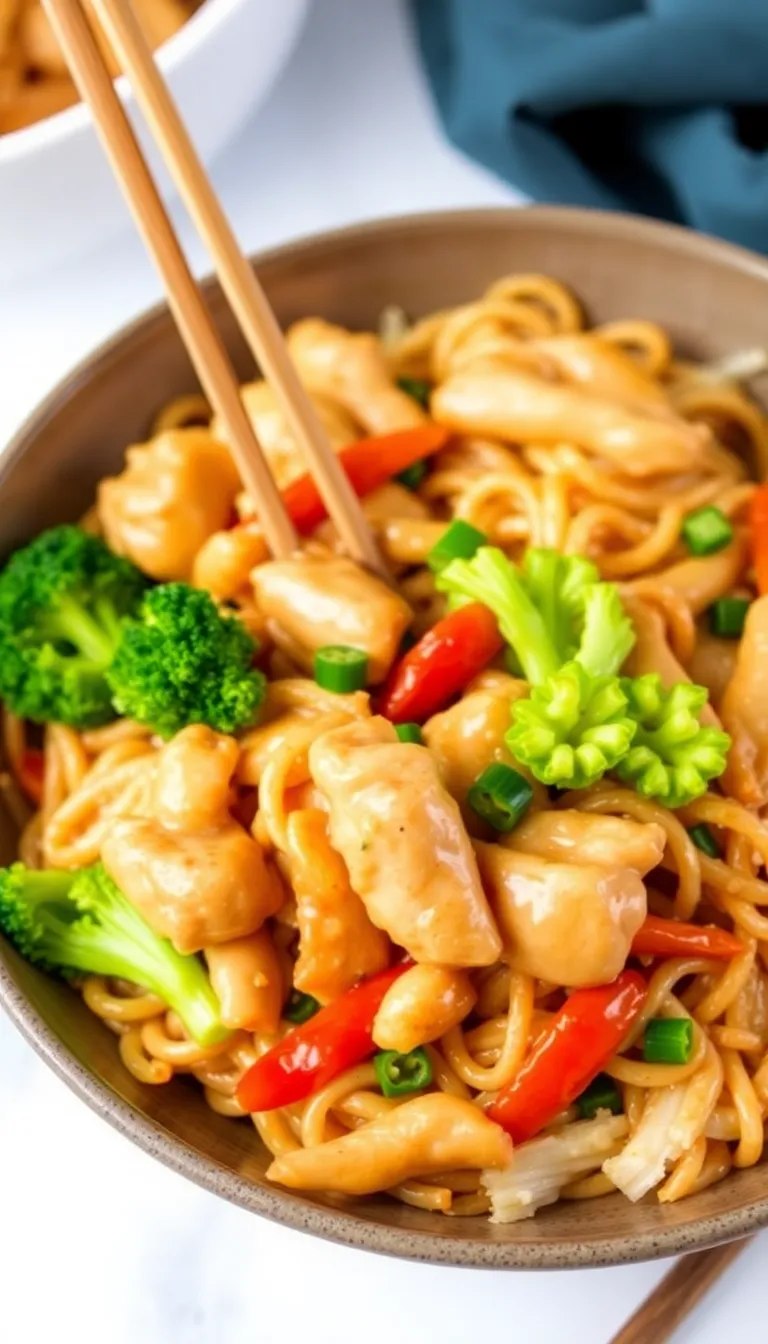
And it takes the same amount of time as waiting for delivery.
30Min Total
4Servings
480Calories
EasyDifficulty
You’ve ordered it a hundred times. You know the drill: it shows up lukewarm, the noodles are clumped together, and that smoky, wok-charred flavor you were craving? Completely gone.
Here’s the thing nobody tells you: restaurant chow mein is actually one of the easiest dishes to nail at home. Once you know two things (high heat + properly velveted chicken), you’re already ahead of most home cooks.
🔥 500°F+
That’s the wok temperature at most Chinese restaurants. Your home stove can get there too. This one trick is what separates good chow mein from great chow mein.
This recipe is weeknight-friendly, deeply flavorful, and honestly? Once you make it, delivery loses its appeal fast. Keep reading because the Pro Tips section alone will change how you stir fry everything forever.
15 minPrep
5 minNoodles
10 minStir Fry
30 minTotal
What You’ll Need
For the Chicken Marinade
- 1 lb boneless skinless chicken breast or thighs, thinly sliced
- 1 tbsp soy sauce (low-sodium)
- 1 tbsp cornstarch
- 1 tsp sesame oil
- ½ tsp white pepper
For the Sauce
- 3 tbsp oyster sauce
- 2 tbsp soy sauce
- 1 tbsp dark soy sauce
- 1 tsp sesame oil
- 1 tsp sugar
- ½ tsp white pepper
- ¼ cup chicken broth or water
For the Stir Fry
- 12 oz fresh chow mein noodles
- 3 tbsp vegetable oil (divided)
- 4 garlic cloves, minced
- 1 tsp fresh ginger, grated
- 2 cups napa cabbage, shredded
- 1 cup bean sprouts
- 1 large carrot, julienned
- 3 stalks green onions, cut into 2-inch pieces
- 1 cup shiitake mushrooms, sliced
- 1 tbsp vegetable oil (for noodles after cooking)
Tools You’ll Need
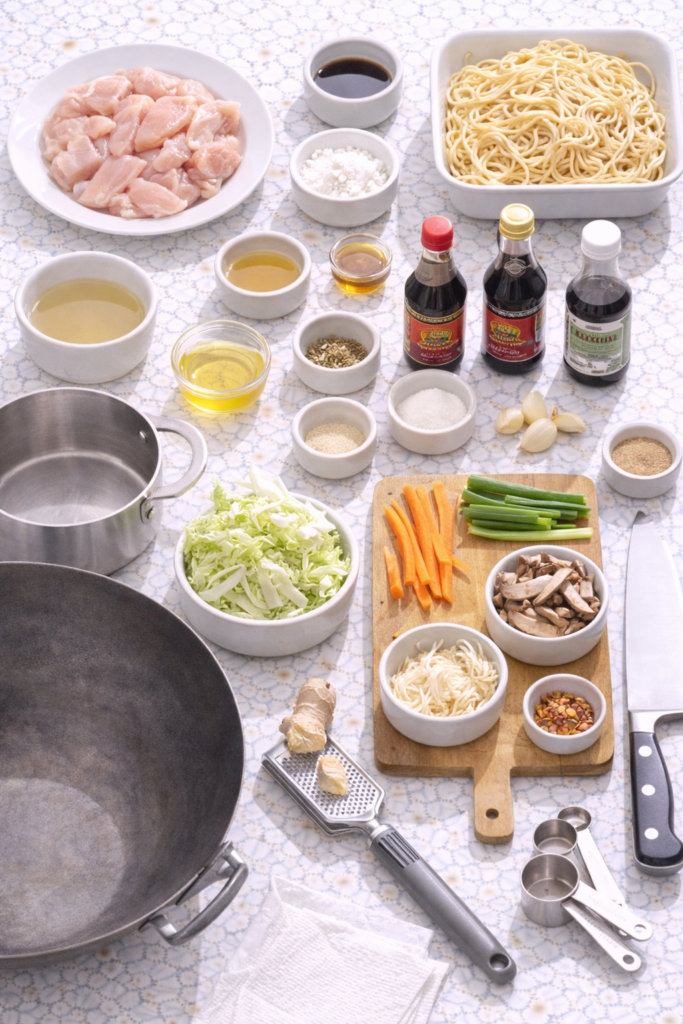
You’ll love these too : chicken thigh recipe
🍳Large wok (preferred) or wide skillet
🍲Large pot for boiling noodles
🔪Sharp chef’s knife + cutting board
🥣Small mixing bowls (x2)
🧲Colander / strainer
🥢Tongs or long chopsticks
📏Measuring spoons + cups
🔢Microplane / box grater (for ginger)
Pro Tips
Read these before you start. They’re the difference between good chow mein and “wait, I made this?” chow mein.
1-Slice the chicken against the grain, thin
This is the one thing most people skip. Cut against the grain at about ¼ inch thick. It’s the difference between silky and chewy. Non-negotiable.
2-Use the cornstarch marinade (velveting)
That impossibly tender chicken you get at Chinese restaurants? It’s velveted. Cornstarch + soy sauce + 15 minutes in the fridge. Simple, and shockingly effective.
3-Max out your stove heat
Don’t go medium. Don’t go medium-high. Go screaming hot. The wok should be smoking slightly before anything touches it. This creates “wok hei” — that subtle smoky flavor restaurants have and most home cooks never get.
4-Undercook your noodles by 1 minute
They finish cooking in the wok. Pull them out just before al dente or you’ll end up with mush. It feels wrong but trust it.
5-Prep EVERYTHING before the wok gets hot
Once the heat is on, this moves fast. Sauce mixed? Check. Noodles drained? Check. Veggies cut? Check. Go in prepared or you’ll be scrambling.
“The biggest mistake home cooks make with stir fry is cooking on medium heat. Once you go high and fast, you never go back.”
Recommended for you : creamy chicken breast recipes
How to Make It
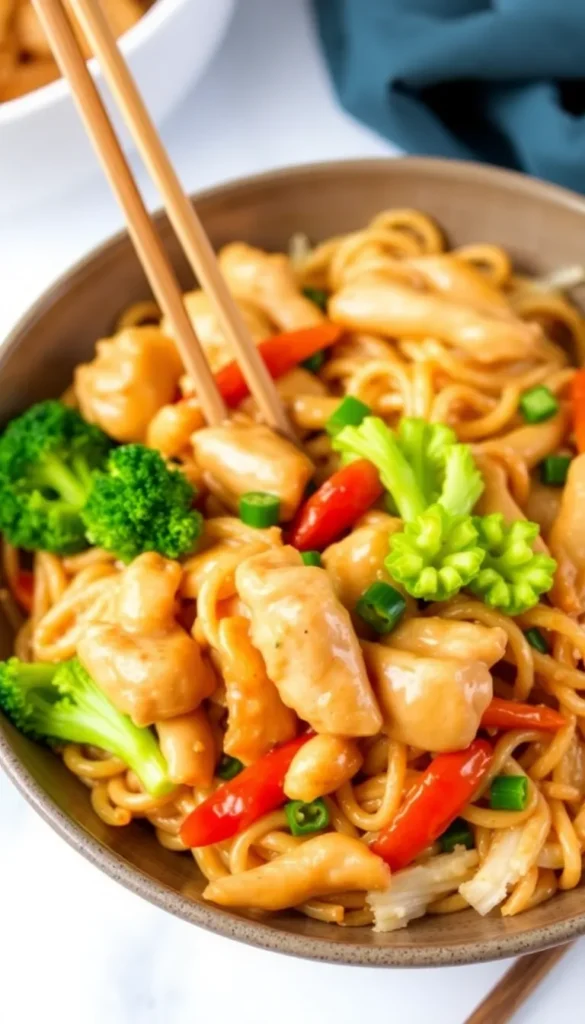
1: Marinate the chicken (15 min)
Slice chicken thinly against the grain. Toss with soy sauce, cornstarch, sesame oil, and white pepper. Let it sit for at least 15 minutes. Even 30 is better.
2 : Mix the sauce
Whisk oyster sauce, both soy sauces, sesame oil, sugar, white pepper, and chicken broth in a small bowl. Set it next to the stove so it’s within arm’s reach.
3: Cook noodles (slightly underdone)
Boil noodles for 1 minute less than the package says. Drain, rinse with cold water immediately, and toss with 1 tbsp of oil to prevent clumping. Set aside.
4:Sear the chicken
Heat wok over highest heat until slightly smoking. Add 1½ tbsp oil. Add chicken in a single layer — don’t touch it for 60-90 seconds. Then stir fry 3-4 minutes until cooked through. Remove and set aside.
5: Cook the vegetables
Add remaining oil to the wok. Add garlic and ginger — stir for 30 seconds. Add carrots and mushrooms first (2 minutes). Then cabbage, bean sprouts, and green onions (1-2 more minutes). Keep the vegetables moving.
People also like : sour cream chicken enchilada recipe
6 : Bring everything together
Add noodles to the wok. Pour the sauce over everything. Toss with tongs for 1-2 minutes until noodles are glossy and slightly caramelized. Add chicken back in, toss for 1 more minute. Taste, adjust, plate immediately.
⚡ Quick Note Eat this straight from the wok. Chow mein is a right-now kind of dish. Every minute it sits, the texture changes. Plate it fast and serve hot.
Substitutions & Variations
| Ingredient | Substitute | Notes |
|---|---|---|
| Chicken | Shrimp, beef strips, tofu, or extra veg | Shrimp cooks in just 2-3 min. Press tofu first for best texture. |
| Fresh chow mein noodles | Dried chow mein, lo mein, or spaghetti | Adjust cook time. Spaghetti works surprisingly well in a pinch. |
| Oyster sauce | Hoisin sauce or extra soy + splash of Worcestershire | Hoisin gives a slightly sweeter flavor profile. |
| Soy sauce | Tamari (for gluten-free) | Use same amounts. Flavor is nearly identical. |
| Napa cabbage | Bok choy, snap peas, broccoli, bell peppers, zucchini | Any crunchy vegetable works. Don’t overthink it. |
| Shiitake mushrooms | Button mushrooms, cremini, or skip entirely | Shiitake adds depth but any mushroom will do. |
Dairy-Free ✓Nut-Free ✓Gluten-Free with swapsVegetarian with swaps
Nutrition Breakdown
Per serving (recipe makes 4):
| Nutrient | Per Serving | % Daily Value (approx.) |
|---|---|---|
| Calories | 480 kcal | 24% |
| Protein | 32g | 64% |
| Carbohydrates | 52g | 19% |
| Fat | 14g | 18% |
| Fiber | 4g | 14% |
| Sodium | ~900mg | 39% |
| Sugar | 6g | 7% |
Lower Sodium Tip
Use low-sodium soy sauce across all three uses and skip any added salt. It cuts sodium by roughly 35% with zero impact on flavor.
Make Ahead Tips
| Component | Can Be Prepped | How to Store |
|---|---|---|
| Marinated chicken | Up to 24 hours ahead | Covered in fridge. Flavor actually improves overnight. |
| Sauce mixture | Up to 5 days ahead | Jar or airtight container in fridge. Shake before using. |
| Cut vegetables | Up to 24 hours ahead | Airtight container with a slightly damp paper towel to keep them crisp. |
| Cooked noodles | Up to 1 day ahead | Tossed with oil, covered in fridge. Rinse with warm water before using. |
What to Serve With It
Chow mein is a full meal on its own. But if you’re feeding a crowd or going all in:
| Dish | Why It Works |
|---|---|
| Hot and sour soup | Cuts through the richness of the stir fry |
| Egg rolls or spring rolls | Great starter, shares similar flavor profiles |
| Steamed jasmine rice | For extra-hungry crowds (no judgment) |
| Cucumber salad with rice vinegar | Bright, acidic contrast to the savory sauce |
| Scallion pancakes | If you want to make it a proper spread |
Leftovers & Storage
❄️Fridge Up to 3 days in an airtight container
🍳Reheat Stir fry on medium-high with a splash of broth. Skip the microwave if you can.
🚫Freezer Not recommended. Noodles lose their texture after freezing.
Reheating Trick The secret to reviving leftover chow mein: add 2-3 tbsp of chicken broth to the pan before you reheat. It rehydrates the noodles and brings the sauce back to life. Game changer.
FAQ
Can I use rotisserie chicken to save time?
Yes. Skip the marinade entirely and shred the rotisserie chicken. Add it back at the very last step just to warm through. Works perfectly and saves 20 minutes.
What’s the difference between chow mein and lo mein?
Same noodles, different technique. Chow mein gets more direct heat contact so the noodles get slightly crispy and charred. Lo mein is tossed in sauce with less frying, so it stays softer. Both are delicious, but chow mein has more texture.
My noodles keep sticking together. Help.
Two things: toss them in oil immediately after draining (do not skip this), and make sure the wok is properly hot before the noodles go in. A lukewarm wok = stuck, mushy noodles every time.
Can I make this without a wok?
Absolutely. A large, wide cast iron skillet works really well because it holds heat. Just make sure it’s fully preheated before anything goes in. You’ll get very close to the same result.
Where do I find fresh chow mein noodles?
The refrigerated section of most Asian grocery stores. If you can’t find them, dried chow mein noodles from a regular grocery store are a solid backup. Just cook them per package directions and pull them 1 minute early.
Is this kid-friendly?
Very. Leave out the shiitake mushrooms and bean sprouts, swap napa cabbage for regular shredded cabbage, and the sauce is savory but not spicy at all. Most kids love it.
Wrapping Up
Here’s what’s going to happen: you’ll make this once, sit down with a bowl of it, and immediately feel a little foolish for spending years ordering the delivery version.
The noodles will have actual texture. The chicken will be silky. The sauce will cling to everything. And you’ll have done it in 30 minutes.
Make it this week. Then come back and drop a comment telling me how it went. Did you swap anything out? Use a different protein? Find a trick that made it even better? I want to hear it.
And if you have a question that wasn’t in the FAQ, ask it below and I’ll get back to you. 👇Leave a Comment Below








1 thought on “This Chicken Chow Mein Is Better Than Any Takeout You’ve Ever Had”