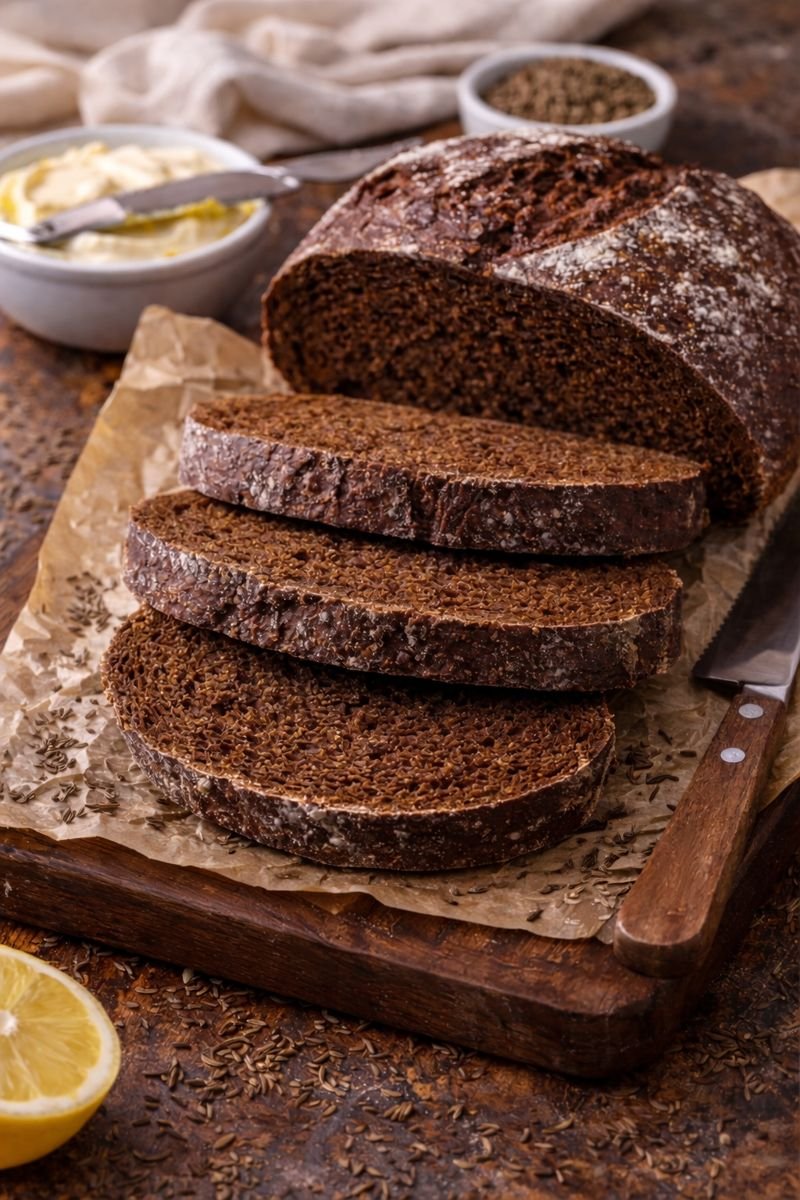
You know that dark, dense, slightly sweet bread that looks impossibly fancy at bakeries?
You can make it at home.
I’m talking real pumpernickel bread with that deep, rich color and earthy flavor that makes regular bread feel boring in comparison.
And before you start thinking this requires some culinary degree or special equipment, let me stop you right there.
This recipe is easier than you think.
The kind of easy where you’ll be kicking yourself for not trying it sooner. The kind where your kitchen smells like a German bakery and you feel like you just unlocked a secret baking superpower.
I first made pumpernickel after visiting a tiny bakery in Berlin where the owner refused to share her recipe but told me the key was “patience and rye.”
She wasn’t wrong.
But after some trial and error (and maybe too much coffee), I figured out how to make a version that’s just as good without the gatekeeping.
This bread is perfect for sandwiches, toast with butter, or just tearing off chunks while it’s still warm. It’s got substance, flavor, and that satisfying chew that makes you actually excited about carbs again.
What You’ll Need
The Dough
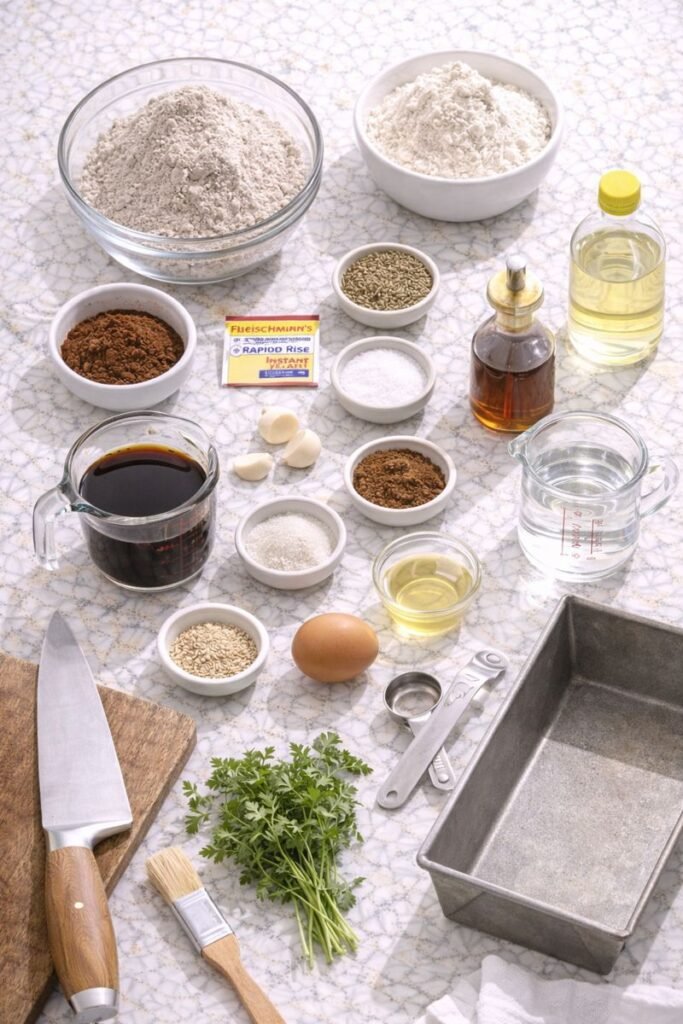
| Ingredient | Amount | Why It Matters |
|---|---|---|
| Rye flour | 2 cups | The backbone of pumpernickel flavor |
| Bread flour | 1½ cups | Gives structure and chew |
| Cocoa powder (unsweetened) | ¼ cup | Creates that signature dark color |
| Caraway seeds | 2 tablespoons | Classic pumpernickel flavor (skip if you hate them) |
| Instant yeast | 2¼ teaspoons | Makes the magic happen |
| Salt | 1 tablespoon | Flavor booster |
| Molasses | 2 tablespoons | Sweet, earthy depth |
| Vegetable oil | 2 tablespoons | Keeps it moist |
| Warm water | 1¾ cups | Activates the yeast |
| Apple cider vinegar | 2 tablespoons | Secret tangy ingredient |
| Instant coffee granules | 1 tablespoon | Deepens the color naturally |
The Wash
- 1 egg white
- 1 tablespoon water
Tools You’ll Need
You’ll love these too : whole wheat bread recipe
✓ Large mixing bowl
✓ Wooden spoon or dough whisk
✓ Kitchen scale (optional but helpful)
✓ 9×5 inch loaf pan
✓ Clean kitchen towel
✓ Pastry brush
✓ Cooling rack
Pro Tips
1. Start with fresh ingredients
Rye flour goes rancid faster than regular flour.
Check the date on your bag. Old rye flour tastes bitter and can ruin an otherwise perfect loaf.
2. Don’t skip the vinegar
I know it sounds weird, but the acidity helps develop that signature tangy flavor pumpernickel is known for.
It also helps the bread rise better.
3. The dough will be sticky
Like, really sticky.
This is normal. Don’t panic and add more flour or you’ll end up with a dry brick. Trust the process.
4. Use instant coffee for deeper color
This is the secret to getting that gorgeous dark color without food dye.
It doesn’t make the bread taste like coffee, just makes it look more authentic.
5. Let it cool completely before slicing
I know this is torture, but pumpernickel needs time to set.
Cut it too early and you’ll get gummy slices instead of clean cuts.
Substitutions and Variations
| Instead of… | Try this… | The result |
|---|---|---|
| Rye flour | 100% bread flour | Works but loses authentic flavor |
| Caraway seeds | Fennel or anise seeds | Different but delicious flavor profile |
| Molasses | Honey or maple syrup | Lighter, sweeter taste |
| Instant coffee | Extra cocoa powder | Still dark but less complex |
| Vegetable oil | Melted butter | Richer flavor |
Fun Add-Ins to Try
💡 Walnuts – adds crunch and earthiness
💡 Raisins – sweet contrast to the tangy bread
💡 Dried cranberries – tart and festive
💡 Sunflower seeds – nutty texture
💡 Orange zest – unexpected brightness
Make Ahead Tips
⏰ The Night Before
Make the dough, let it rise once, shape it, put it in the pan, cover tightly with plastic wrap, and refrigerate overnight.
Let it come to room temperature (about 1 hour) before baking.
⏰ Weeks Ahead
Bake the loaf completely, let it cool, wrap tightly in plastic wrap then aluminum foil.
Freeze for up to 3 months. Thaw at room temperature before slicing.
Recommended for you : rye bread recipe
How to Make Pumpernickel Bread
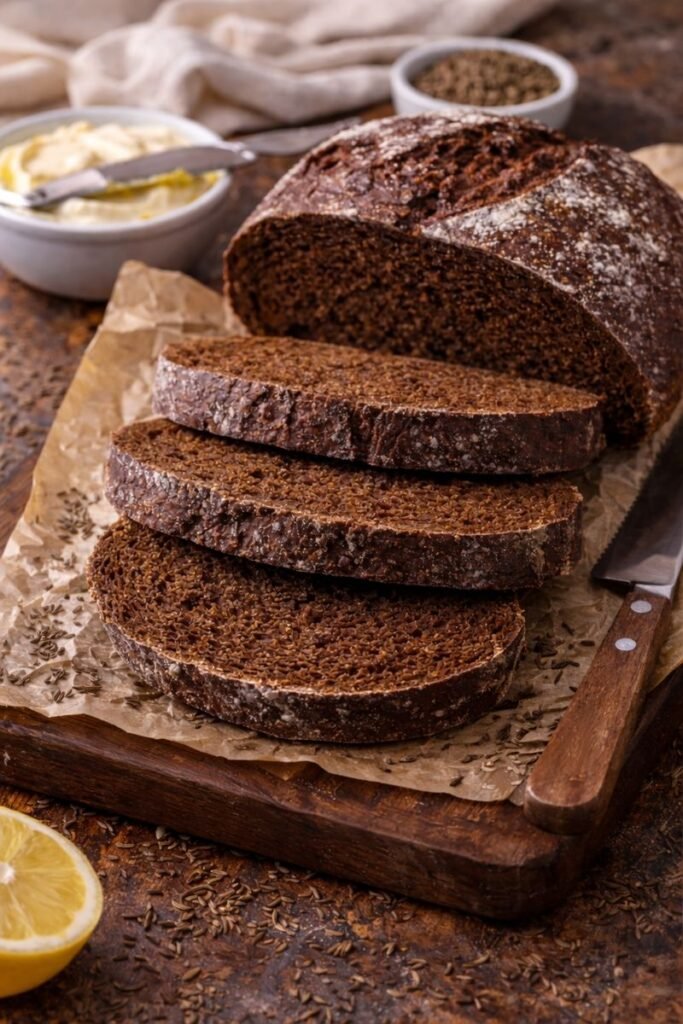
Step 1: Mix the Dry Stuff
In your large bowl, whisk together:
- Rye flour
- Bread flour
- Cocoa powder
- Caraway seeds
- Yeast
- Salt
- Coffee granules
Make sure everything is evenly distributed. No flour pockets hiding in the corners.
Step 2: Combine the Wet Ingredients
In a separate bowl or measuring cup, mix:
- Warm water (110°F, like bath water)
- Molasses
- Oil
- Vinegar
The molasses might be stubborn, but keep stirring until it dissolves.
Step 3: Make the Dough
Pour the wet ingredients into the dry ingredients.
Stir with a wooden spoon until you have a sticky, shaggy dough.
It won’t look pretty yet. That’s fine.
Step 4: Knead Like You Mean It
Turn the dough out onto a lightly floured surface.
Knead for 8-10 minutes.
The dough will be sticky at first but will become smoother and more elastic. Add tiny amounts of flour only if absolutely necessary.
Grace’s Note: Your arms will get tired. This is normal. Think of it as a free workout. 💪
Step 5: First Rise
People also like : bread rolls recipe
Place the dough in a lightly oiled bowl, turning it once to coat all sides.
Cover with a damp kitchen towel and let it rise in a warm spot for about 1-1½ hours, or until doubled in size.
Where to let it rise:
✓ Near a sunny window
✓ On top of the fridge
✓ In the oven with just the light on
✓ Next to a heating vent
Step 6: Shape the Loaf
Punch down the dough (so satisfying).
Turn it out onto your work surface.
Shape it into a loaf by folding the edges toward the center, then rolling it into a tight log shape. Pinch the seams closed.
Step 7: Second Rise
Place the shaped dough seam-side down in a greased 9×5 inch loaf pan.
Cover with the towel again and let it rise for another 45-60 minutes, until it rises about 1 inch above the rim of the pan.
Step 8: Preheat and Prep
About 15 minutes before the dough is done rising:
- Preheat your oven to 350°F
- Whisk together the egg white and water to make your wash
Step 9: Brush and Bake
Gently brush the top of the loaf with the egg wash.
This gives it that beautiful glossy finish.
Bake for 35-40 minutes, until the top is dark and firm, and the internal temperature reads 190°F if you have a thermometer.
Step 10: Cool Completely
Remove the bread from the oven and let it cool in the pan for 10 minutes.
Then turn it out onto a cooling rack.
Resist the urge to cut into it for at least 1 hour.
I know this part is hard. But it’s crucial for the texture.
Visual Timeline
| Time | What’s Happening |
|---|---|
| 0:00 | Mix ingredients |
| 0:20 | Start kneading |
| 0:30 | First rise begins |
| 2:00 | Punch down, shape loaf |
| 2:05 | Second rise begins |
| 3:00 | Bread goes in oven |
| 3:40 | Bread comes out |
| 4:40 | Finally time to slice! 🎉 |
Leftovers and Storage
Room Temperature
Wrap the cooled bread in plastic wrap or store in a bread bag.
Stays fresh for 4-5 days on the counter.
Freezer
Slice the bread first, then wrap individual slices in wax paper and store in a freezer bag.
This way you can pull out just what you need.
Toast directly from frozen.
Revive Stale Bread
Wrap it in a damp kitchen towel and heat in a 300°F oven for 10 minutes.
Comes back to life like magic.
Nutritional Breakdown
| Nutrient | Per Slice (1/12 loaf) |
|---|---|
| Calories | 165 |
| Protein | 5g |
| Fat | 3g |
| Carbohydrates | 30g |
| Fiber | 4g |
| Sugar | 3g |
| Sodium | 390mg |
| Iron | 8% DV |
| Magnesium | 6% DV |
Dietary notes: This bread is dairy-free and can be made vegan by skipping the egg wash or using plant milk for brushing.
What to Serve With Pumpernickel
Classic Pairings
🥯 The German Breakfast
Pumpernickel + butter + sliced cucumber + salt
🥯 The Deli Classic
Pumpernickel + corned beef + Swiss cheese + sauerkraut + Russian dressing (hello, Reuben)
🥯 The Fancy Brunch
Pumpernickel + smoked salmon + cream cheese + capers + red onion
🥯 The Simple Pleasure
Pumpernickel + salted butter + good jam
Soup Pairing Guide
| Soup | Why It Works |
|---|---|
| French onion | The bread’s density holds up to the broth |
| Mushroom bisque | Earthy on earthy = perfection |
| Beef stew | Hearty bread for hearty stew |
| Split pea | Classic German combo |
| Tomato soup | Sweet acidity cuts the richness |
Troubleshooting Guide
Problem: Dough isn’t rising
Possible causes:
- Yeast is expired or dead
- Water was too hot (killed the yeast)
- Water was too cold (yeast isn’t activated)
- Room is too cold
Solution: Check yeast freshness, use water at exactly 110°F, find a warmer spot
Problem: Bread is too dense
Possible causes:
- Over-kneading
- Not enough rise time
- Too much flour added
Solution: This bread IS meant to be dense, but if it’s like a brick, you might have added too much flour or didn’t let it rise enough
Problem: Bread is pale, not dark
Possible causes:
- Used Dutch cocoa instead of natural cocoa
- Forgot the coffee granules
- Not enough molasses
Solution: Make sure you’re using unsweetened natural cocoa powder and don’t skip the instant coffee
Problem: Bread tastes bitter
Possible causes:
- Old rye flour
- Too much cocoa powder
- Burned during baking
Solution: Use fresh rye flour, measure cocoa carefully, check oven temperature with thermometer
FAQ
Why is my pumpernickel not dark enough?
The color comes from the cocoa powder and coffee.
Make sure you’re using unsweetened cocoa (not the sweet stuff for hot chocolate) and don’t skip the instant coffee.
Some recipes also add a tiny bit of dark food coloring, but I prefer to keep it natural.
Can I make this without a stand mixer?
Yep! This entire recipe is hand-mixed.
A stand mixer makes kneading easier, but it’s totally doable by hand.
Your arms might get a workout, but that’s what makes it taste better. 😉
My dough isn’t rising. What happened?
Check your yeast. If it’s expired, you’re out of luck.
Also make sure your water wasn’t too hot (over 120°F kills yeast) or too cold (under 100°F and it won’t activate properly).
The dough needs a warm environment to rise, ideally around 75-80°F.
Can I use a bread machine?
Sure. Add ingredients in the order recommended by your machine’s manual (usually wet first, then dry, with yeast on top).
Use the whole wheat or basic setting.
Keep in mind the texture might be slightly different.
What’s the difference between pumpernickel and rye bread?
Traditional pumpernickel is made with coarsely ground rye, baked at a very low temperature for up to 24 hours, which caramelizes the sugars and creates that dark color.
Modern pumpernickel (like this recipe) uses rye flour, cocoa powder, and molasses to achieve a similar flavor and color in a fraction of the time.
How do I know when it’s done baking?
The top should be firm and dark.
When you tap the bottom of the loaf, it should sound hollow.
If you have an instant-read thermometer, the internal temperature should be 190-200°F.
Why does my bread have a dense, heavy texture?
That’s actually normal for pumpernickel.
It’s supposed to be dense and hearty, not light and fluffy like white bread.
If it’s too dense, you might have packed too much flour into your measuring cups. Spoon flour into the cup and level it off instead of scooping.
Can I make this gluten-free?
Not really. The gluten from the bread flour is what gives this bread its structure.
Gluten-free pumpernickel is a completely different recipe that requires specialty ingredients like xanthan gum and different flour blends.
How long does homemade pumpernickel last?
At room temperature: 4-5 days
In the fridge: Don’t do this, it dries out
In the freezer: Up to 3 months
Can I double this recipe?
Absolutely. Just make two separate loaves instead of one giant one.
They’ll bake at the same time, same temperature.
Wrapping Up
Making your own pumpernickel bread is one of those things that sounds intimidating but becomes second nature after you do it once.
The smell alone is worth it.
That deep, rich, slightly sweet aroma that fills your kitchen and makes you feel like you’re living in some cozy European village.
And the taste? So much better than anything you’ll find at the store.
More flavor, better texture, and zero weird preservatives.
Give this recipe a try and let me know how it turns out in the comments below.
Did you add any fun mix-ins? Serve it with something amazing? Run into any issues?
I’d love to hear about it.










1 thought on “Pumpernickel Bread Recipe (Super Easy + Totally Worth It)”