One Pot Vegetarian Pasta – Chasing Foxes
VegetarianOne Pot30 MinutesEasyMeal Prep
You know that feeling when dinner is on the table in 30 minutes, the kitchen isn’t destroyed, and everyone at the table goes quiet because they’re too busy eating?
That’s this recipe.
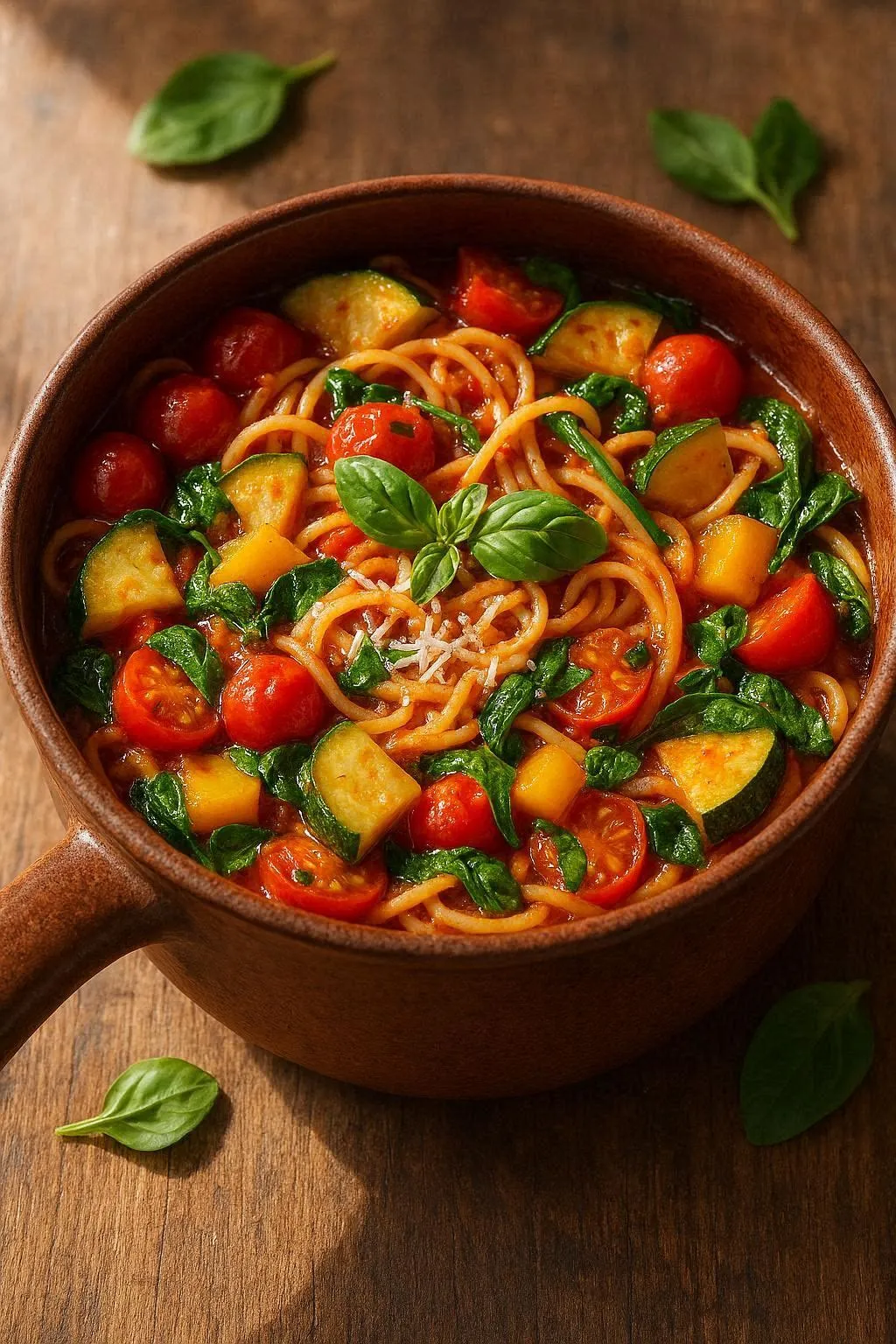
One pot vegetarian pasta sounds like a compromise. Like the kind of meal you make when you’re tired and just need to get food on the table. But here’s what nobody tells you — the pasta absorbs the broth directly as it cooks. Every noodle is saturated with flavor. The sauce? It basically makes itself.
“When pasta cooks in seasoned broth instead of plain water, the starch it releases creates a silky, clingy sauce you’d normally have to make separately. You get two steps in one.”
30Total mins
10Prep mins
20Cook mins
4Servings
1Pan
What You’ll Need
Everything in a single list — nothing fancy, nothing hard to find.
Pasta & Liquid
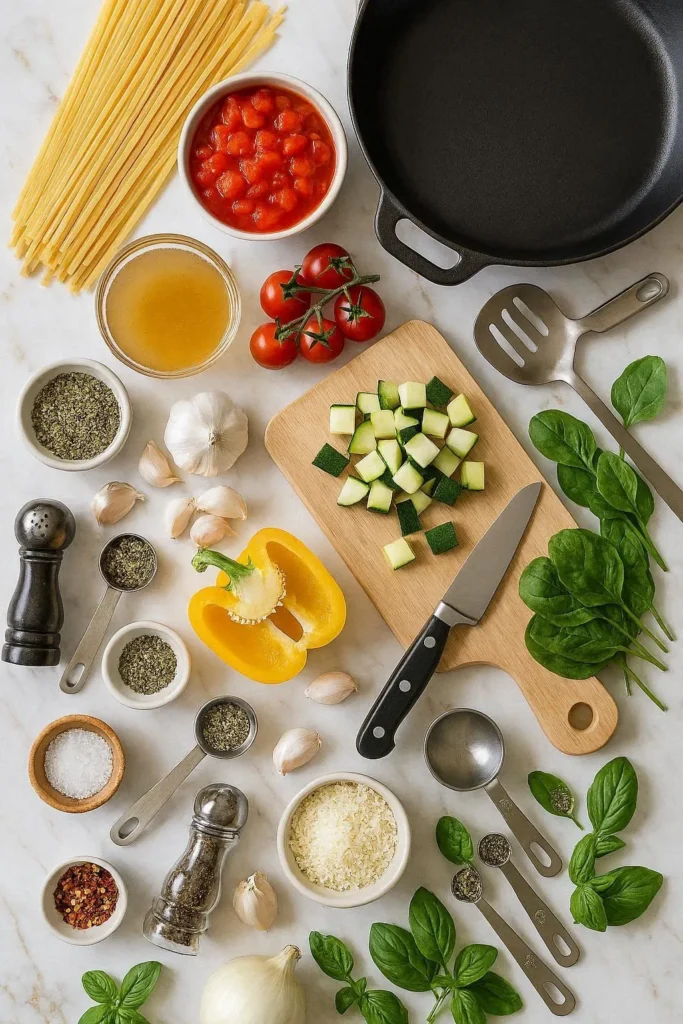
- 12 oz (340g) linguine or spaghetti, uncooked
- 1 can (14.5 oz) diced tomatoes, with all the juice
- 3 cups vegetable broth
- 1½ cups water
Vegetables
- 1 medium yellow onion, thinly sliced
- 4 garlic cloves, minced
- 1 cup cherry tomatoes, halved
- 1 zucchini, sliced into half-moons
- 1 small bell pepper (any color), diced
- 2 large handfuls of fresh spinach or baby kale
Seasonings & Finishing
- 2 tbsp olive oil
- 1 tsp dried oregano
- 1 tsp dried basil (or a handful of fresh, added at the end)
- ½ tsp red pepper flakes (adjust to taste)
- 1 tsp salt
- ½ tsp black pepper
- ½ cup freshly grated parmesan (or nutritional yeast for vegan)
- Fresh basil leaves + extra parmesan, for topping
Tools You’ll Need
You may also like : one pot spaghetti
Keep it minimal.
| Tool | Why You Need It |
|---|---|
| 12-inch deep skillet or Dutch oven | Wide surface = even cooking. A narrow pot will give you mushy pasta at the bottom and crunchy at the top. |
| Wooden spoon or tongs | For stirring frequently in the first few minutes. |
| Knife & cutting board | All vegetables need slicing before you start. |
| Measuring cups & spoons | Liquid ratios matter more here than in most recipes. |
| Box grater | Pre-shredded parmesan melts less smoothly — freshly grated is worth it. |
| Ladle (optional) | Helpful for serving and checking sauce consistency. |
Pro Tips
The things that actually make a difference — from someone who’s made this a dozen times.
- 01 Don’t break the pasta. It feels wrong to drop a full handful of linguine into the pan, but trust it. The noodles soften and curl as they cook, and keeping them intact helps the final texture.
- 02 Stir often in the first 5 minutes. That’s when the pasta is most likely to clump or stick to the bottom. Once it’s softened and semi-submerged, it mostly takes care of itself.
- 03 Use a wide pan, not a tall pot. You need surface area for even liquid reduction. A 12-inch skillet or Dutch oven is ideal. Narrow pots cook unevenly, every time.
- 04 Taste the salt at the halfway mark. Vegetable broths vary wildly in saltiness. Start conservative, then adjust when the pasta is about 50% cooked.
- 05 Pull it off the heat while it still looks a little wet. The pasta keeps absorbing liquid even after the stove is off. If it looks perfectly dry in the pan, it’ll be gluey in the bowl.
You’ll love these too : one pot rezepte
Instructions
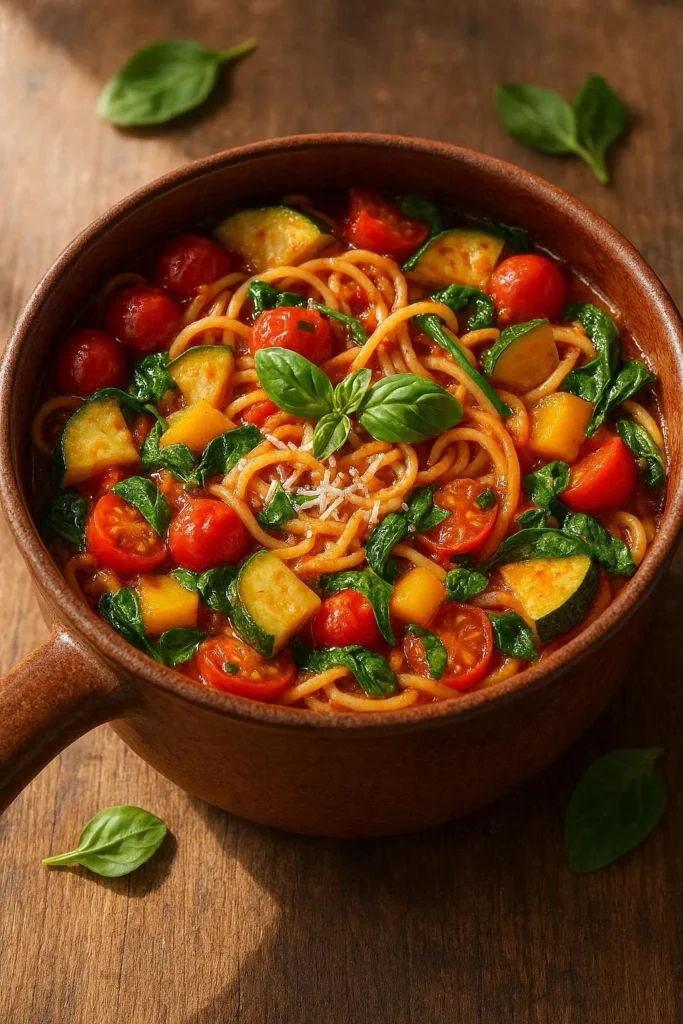
Seven steps. One pan. Done in 30 minutes.
1
Sauté the aromatics
Warm olive oil in your large skillet over medium-high heat. Add the sliced onion and diced bell pepper. Cook 3–4 minutes until the onion softens and starts to get golden on the edges. Add minced garlic and cook 1 more minute, stirring constantly.
2
Add everything (except the greens and cheese)
Add the uncooked pasta, canned diced tomatoes with juice, cherry tomatoes, vegetable broth, water, zucchini, oregano, dried basil, red pepper flakes, salt, and black pepper. Give it one big stir to combine.
3
Bring to a boil
Turn heat to high and bring to a rolling boil. This takes about 4–5 minutes.
4
Cook and stir
Reduce heat to medium. Cook for 9–12 minutes, stirring every 1–2 minutes. The pasta cooks directly in the liquid and absorbs most of it. Stop when the pasta is al dente and only a small amount of saucy liquid remains at the bottom.
⚠ Watch for this
If all the liquid is gone before the pasta is cooked, add ¼ cup of water at a time and continue. Your heat may be slightly high or your pan too narrow.
Recommended for you : one pot pasta recipes
5
Wilt the greens
Drop in both handfuls of spinach (or baby kale) and toss everything together. The residual heat will wilt it in about 60 seconds.
6
Finish with parmesan
Turn off the heat. Add freshly grated parmesan and toss again. The remaining liquid and starch will turn into a glossy, light sauce that clings to every noodle.
7
Serve immediately
Top with fresh basil and extra parmesan. Eat while it’s hot — this one doesn’t wait well.
✅ How to know it’s done
The pasta should be al dente (slight bite, not mushy), and you should see a small pool of thick, saucy liquid at the base of the pan — not a dry pan, not a watery soup. That liquid is the sauce.
Substitutions & Variations
This recipe bends without breaking. Here’s your swap guide.
| Original | Swap It For | Notes |
|---|---|---|
| Linguine | Spaghetti, fettuccine, rotini | Shorter pasta shapes — reduce liquid by ½ cup and check 2 min early. |
| Parmesan | Nutritional yeast (vegan), pecorino | Nutritional yeast also adds a nice nutty depth. |
| Spinach | Arugula, baby kale, Swiss chard | Arugula adds a peppery bite — add after plating, not while cooking. |
| Zucchini | Eggplant, mushrooms, fennel | Mushrooms add a meatier texture — great for hearty appetites. |
| Cherry tomatoes | Sun-dried tomatoes or more canned | Sun-dried adds intense, concentrated sweetness. |
| Red pepper flakes | Smoked paprika or skip it | Smoked paprika swaps heat for depth. |
💡 Want to add protein?
Stir in a drained can of white beans or chickpeas in Step 2. Both hold their shape through cooking and add about 8g of protein per serving. For tofu or tempeh — pan-fry separately until golden, then stir in during the last 2 minutes.
Make Ahead Tips
⭐ Most important rule
Don’t cook the pasta ahead. One pot pasta does not reheat beautifully the next day — it clumps and thickens. It’s a 30-minute meal for a reason. What you can prep ahead:
- Vegetables: Slice and dice everything up to 2 days ahead. Store in an airtight container in the fridge.
- Parmesan: Grate ahead and refrigerate. Freshly grated melts better than bagged pre-shredded.
- The base: Sauté the onion, garlic, and bell pepper ahead, refrigerate, and add pasta + liquids when you’re ready to cook.
Nutritional Breakdown
Per serving (serves 4). Values will vary slightly depending on your broth brand.
~420Calories
15gProtein
62gCarbs
12gFat
6gFiber
~680mgSodium
Diet-Friendly Adjustments
| Diet | What to Change | Impact |
|---|---|---|
| Vegan | Use nutritional yeast + confirmed vegan broth | No other changes needed |
| Gluten-free | Certified GF pasta (rice or chickpea) | Check doneness at 8 min — GF pasta cooks faster |
| Lower sodium | Low-sodium broth + reduce salt by half | Drops sodium to ~350mg/serving |
| Higher protein | Add 1 can white beans | +8g protein per serving |
Meal Pairing Ideas
- Simple arugula salad with lemon vinaigrette
- Warm crusty sourdough or focaccia
- Roasted broccolini on the side
- A glass of dry white wine like Pinot Grigio (it pairs well with the tomato-herb base)
Leftovers & Storage
🧊 Storage
Store leftovers in an airtight container in the fridge for up to 3 days. Do not freeze — the pasta texture goes very soft after thawing and the vegetables become watery.
How to Reheat
- Add a splash of water or broth (2–3 tablespoons per serving) before reheating.
- Reheat on the stovetop over medium-low or in the microwave in 60-second bursts.
- Stir well while reheating to prevent sticking.
- Add a fresh handful of parmesan after reheating — it’ll melt better and taste fresher than reheating it with the cheese already on.
FAQ
Can I use gluten-free pasta?
Yes. Brown rice pasta and chickpea pasta both work well. Chickpea pasta especially holds up nicely in this method. Start checking for doneness at the 8-minute mark since it cooks faster than regular pasta.
My pasta absorbed all the liquid before it was cooked. What happened?
Your heat was probably too high, or your pan was too small. Add an extra ½ cup of broth or water and reduce the heat slightly. You want a steady simmer-boil — not a full rapid boil.
Can I double the recipe?
Yes, but you’ll need a very large pot (at least 6 quarts). Keep the same liquid ratio: for every 12 oz of pasta, use 3 cups broth + 1½ cups water + 1 can tomatoes.
Is this spicy?
At ½ tsp red pepper flakes it has a gentle warmth, not heat. Leave it out entirely for something kid-friendly. Increase to 1 tsp if you like it properly spicy.
Can I add tofu or tempeh?
Absolutely. Cube and pan-fry separately until golden, then stir in during the last 2 minutes of cooking so it doesn’t turn mushy.
I only have a narrow pot. Can I still make this?
You can, but stir more frequently and expect slightly uneven cooking. A wide skillet genuinely is the better tool — if you cook this often, it’s worth it.
Can I skip the cherry tomatoes?
Yes, just add a bit more of the canned diced tomatoes. Cherry tomatoes add little bursts of sweetness, but the dish is great without them too.
Wrapping Up
This is one of those recipes that quietly becomes a weekly thing. Not because it’s trendy. But because it’s genuinely good, comes together fast, and leaves you with one pan to wash.
Try it this week. Then come back and tell me how it went. Did you add white beans? Swap in kale? Eat the whole pot with zero regrets? Drop your questions and comments below — I read every single one. 🍝






1 thought on “One Pot Pasta That Actually Tastes Like You Tried”