One Pot Pasta – Chasing Foxes Style Blog Post
Recipes · Under 30 Minutes · One Pan
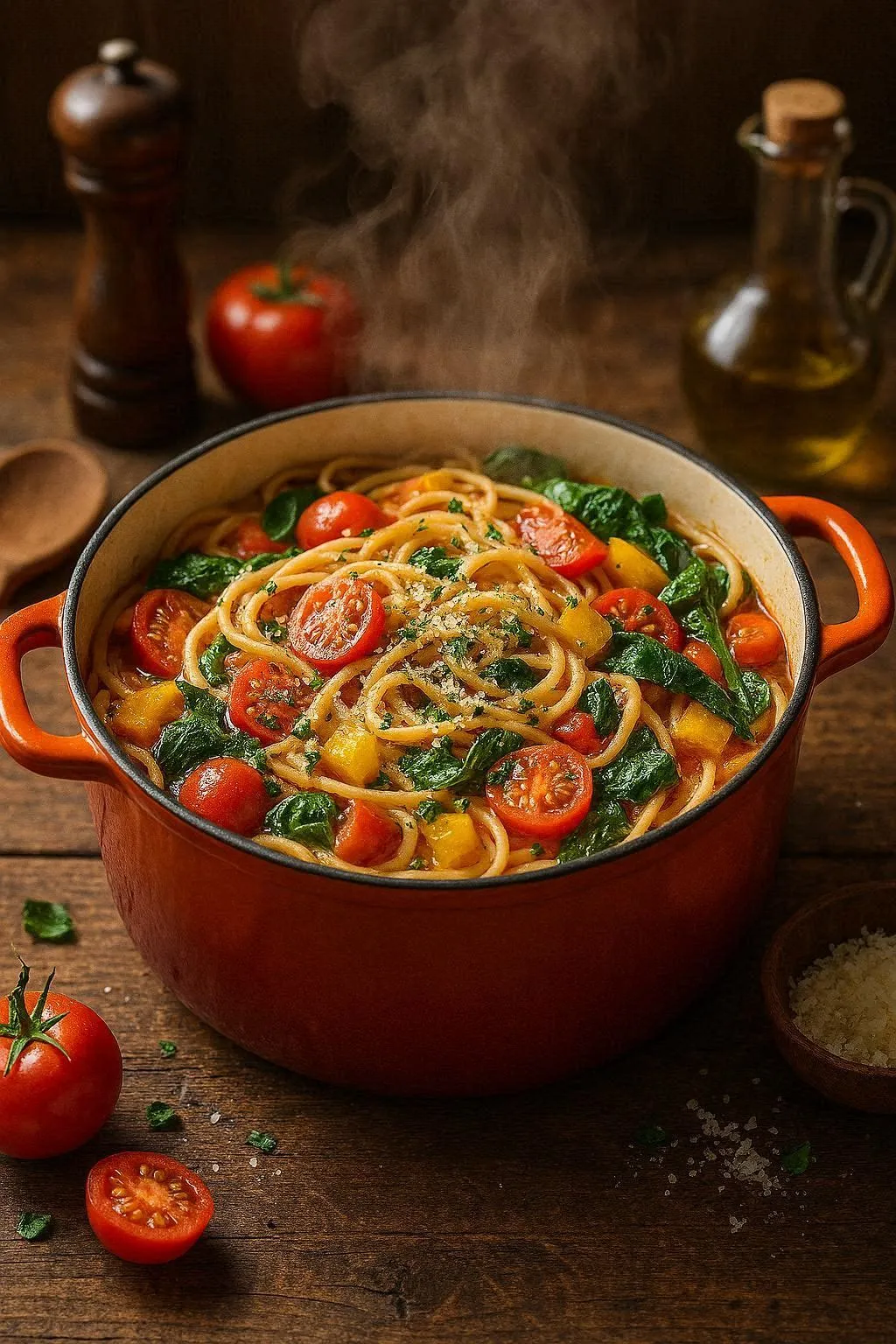
You throw dry pasta into a pan of raw ingredients, cook it all together, and somehow end up with a creamy, garlicky, restaurant-quality dinner.
No separate pot of boiling water. No multiple pans. One dish to wash.
I put this off for way longer than I should have because I kept assuming the pasta would turn out gluey or the sauce would be watery and thin. Neither happened. The pasta absorbs the broth and the cream as it cooks, which means every single strand is already flavored before it hits your plate.
It takes 28 minutes start to finish. And it will probably become the thing you make on every busy weeknight you don’t feel like cooking but still want something good. 🍝
28Minutes Total
1Pan to Wash
4Servings
620Kcal / Serving
“The pasta cooks in the sauce, not separately. That’s the whole secret. It absorbs garlic, tomato, and sausage flavor while it cooks.”
What You’ll Need
The Pasta + Base
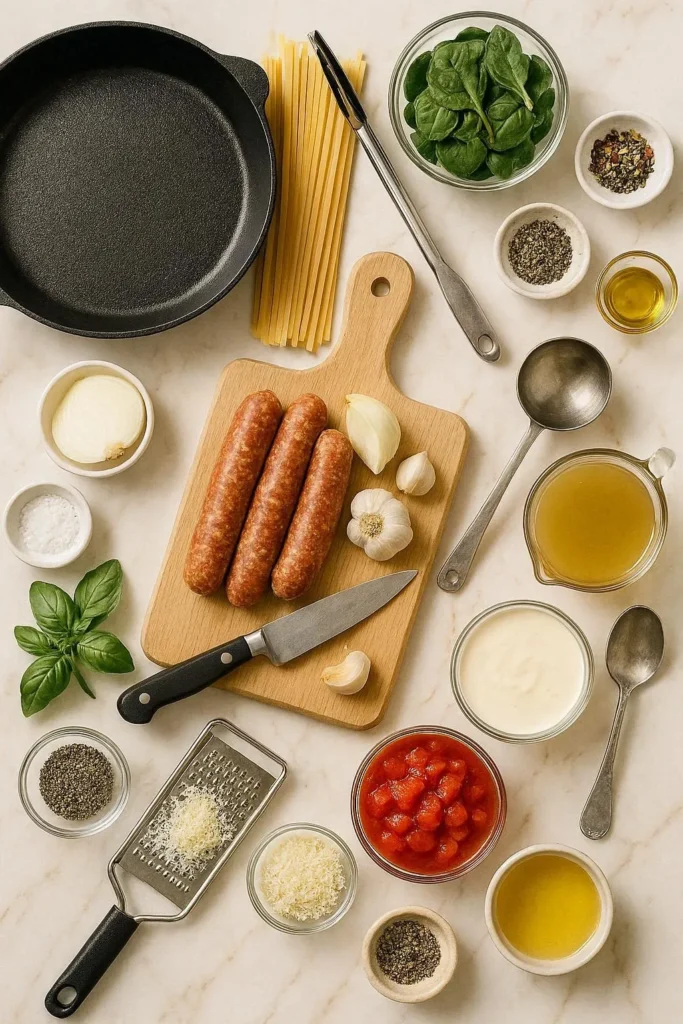
12 oz linguine or spaghetti (uncooked)
1 lb Italian sausage, casings removed
1 medium yellow onion, thinly sliced
5 cloves garlic, minced
1 can (14.5 oz) diced tomatoes, undrained
3 cups low-sodium chicken broth
Sauce + Seasoning
1 cup heavy cream
1/2 cup grated Parmesan cheese
2 tbsp olive oil
1 tsp dried Italian seasoning
1/2 tsp red pepper flakes
1/2 tsp salt + 1/4 tsp black pepper
Finishing Touches
1 cup baby spinach
Fresh basil, for serving
Quick Fact
One pot pasta works because pasta starch released during cooking actually thickens the sauce naturally. No roux, no cornstarch. Just science doing its thing.
Tools You’ll Need
People also like : vegetarian one pot pasta recipes
| Tool | Why You Need It |
|---|---|
| 12-inch deep skillet or wide pot | Pasta needs room to be mostly submerged in liquid |
| Wooden spoon or silicone spatula | For breaking up sausage and stirring frequently |
| Sharp knife + cutting board | Onion and garlic prep |
| Box grater | Fresh Parmesan melts into sauce; pre-grated doesn’t |
| Tongs | Tossing the pasta once cream goes in |
| Measuring cups and spoons | Liquid ratio matters here more than most recipes |
Pro Tips
- Don’t walk away from the stove. This is not a set-it-and-leave-it recipe. Stir every 2-3 minutes or the pasta sticks and burns. I learned this the hard way.
- Use a wide, deep pan. A shallow skillet means your pasta pokes out above the liquid and cooks unevenly. Height matters more than width here.
- Taste and salt your broth before you start. Low-sodium broth is good for control, but it needs seasoning. An underseasoned broth means a bland final dish, and no amount of Parmesan saves it.
- Add cream off the heat. Let the pan cool slightly before stirring in the heavy cream. If the pan is too hot, the cream breaks and you get an oily, grainy mess instead of a silky sauce.
- If liquid runs out early, add broth in small splashes. Different pasta brands absorb at different rates. A quarter cup of broth at a time is all you need to course-correct.
You may also like : one pot spaghetti
How to Make It
1-Brown the Sausage
Heat 2 tbsp olive oil in your skillet over medium-high heat. Add the sausage and break it up as it cooks. Cook 5-6 minutes until browned. Don’t drain all the fat if using pork sausage. That fat carries a ridiculous amount of flavor into the sauce.
2-Sauté the Aromatics
Push the sausage to one side. Add the sliced onion to the other side and cook for 3 minutes until soft. Add the garlic and cook for 60 seconds. You’ll smell it before the timer goes off. That’s your cue.
3Add Everything Into the Pan
Lay the uncooked pasta in the pan. Pour in the diced tomatoes (with all their juices), chicken broth, Italian seasoning, red pepper flakes, salt, and black pepper. Stir so pasta is mostly submerged.
Watch Out
If your pasta is sticking up out of the liquid, either push it down with a spoon or add a small splash of extra broth. Exposed pasta won’t cook evenly and will be chewy in spots.
You’ll love these too : one pot rezepte
4-Cook the Pasta in the Sauce
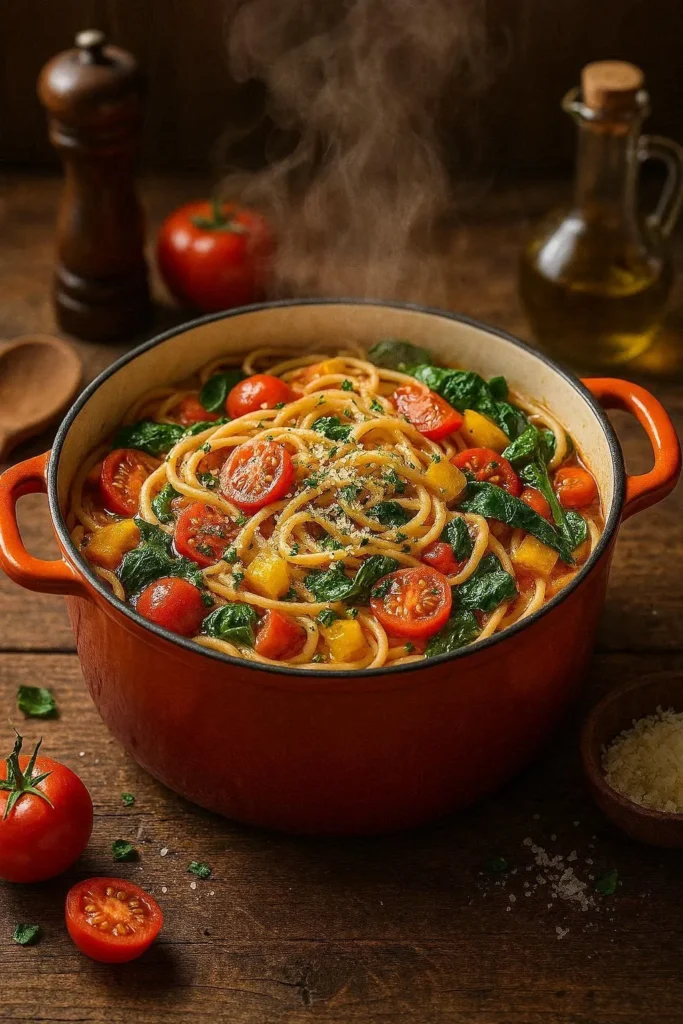
Bring to a boil over medium-high heat. Reduce to medium, cook uncovered for 10-13 minutes, stirring every 2-3 minutes. The liquid thickens and reduces as the pasta absorbs it. When the pasta is al dente and the sauce clings to it, you’re there.
5-Add Cream and Spinach
Lower heat to low. Stir in the heavy cream and baby spinach. Let it sit for 1-2 minutes. The spinach wilts. The cream incorporates. The whole pan goes from good to very good.
6-Finish with Parmesan and Serve
Take the pan off heat. Stir in the Parmesan. Taste for salt. Top with fresh basil and extra cheese. Serve from the pan because there is no reason to dirty another dish at this point.
Substitutions and Variations
| Original Ingredient | Swap It For | Best For |
|---|---|---|
| Italian sausage | Ground turkey, ground chicken, or shrimp | Lighter version |
| Italian sausage | Cannellini beans + extra spinach | Full vegetarian |
| Heavy cream | Full-fat coconut milk | Dairy-free option |
| Heavy cream | Cream cheese thinned with broth | Extra thick + rich |
| Linguine | Penne, rigatoni, farfalle | Short pasta lovers |
| Parmesan | Pecorino Romano or nutritional yeast | Sharper flavor / vegan |
| Baby spinach | Kale, arugula, or sun-dried tomatoes | Different flavor profiles |
| Chicken broth | Vegetable broth | Vegetarian / vegan |
Spice It Up
Double the red pepper flakes and add a pinch of cayenne if you want real heat. A drizzle of chili oil at the end works too.
Make-Ahead Tips
- Slice onion and mince garlic up to 3 days ahead. Store together in an airtight container in the fridge.
- Brown the sausage ahead and refrigerate. Add it back at Step 2 when you’re ready to cook.
- Grate your Parmesan in advance. Pre-grated from a bag works but fresh melts far better into the sauce.
- Measure out your dry spices into a small bowl ahead of time. Makes the actual cook-time feel effortless.
Nutritional Breakdown
| Nutrient | Per Serving | Lightened Version |
|---|---|---|
| Calories | 620 kcal | ~490 kcal |
| Protein | 28g | 26g |
| Carbohydrates | 52g | 52g |
| Fat | 32g | 20g |
| Fiber | 3g | 4g |
| Sodium | 780mg | 640mg |
Lightened version: swap heavy cream for half-and-half, use turkey sausage, reduce Parmesan to 1/4 cup.
What to Serve With It
| Pairing | Why It Works |
|---|---|
| Simple green salad with lemon vinaigrette | Cuts through the cream nicely |
| Crusty sourdough or garlic bread | For all that sauce at the bottom of the pan |
| Roasted asparagus or broccolini | Add veggies without complicating the meal |
| Pinot Noir or Chianti | Classic pairing with tomato-cream sauces |
Leftovers and Storage
Storing
- Cool completely before sealing in an airtight container
- Keeps in the fridge for up to 4 days
- Freezing works but cream sauce can separate slightly when thawed
Reheating
- Add a splash of chicken broth or water before reheating
- Stovetop over low heat is best — stir frequently
- Microwave: 60-second intervals, stir between each one
- Don’t overheat. High heat breaks the cream and the sauce turns grainy
Good to Know
The pasta continues absorbing liquid in the fridge, so leftovers will be thicker. The splash of broth when reheating brings it right back to the right consistency.
FAQ
Can I use gluten-free pasta?
Yes, but check it 2 minutes earlier than the package says. Gluten-free pasta can go from perfect to mushy quickly and absorbs liquid at a different rate than regular pasta.
My sauce looks too thin. What do I do?
Keep cooking uncovered for a few more minutes and stir frequently. The liquid reduces fast. You can also stir in an extra tablespoon of Parmesan to help pull it together.
Can I double this recipe?
Yes. Use a very large pot or Dutch oven. Pasta needs space and the liquid needs room to circulate. Watch liquid levels closely and add extra broth in small amounts if needed.
My pasta is sticking to the bottom. How do I fix it?
Add a splash of broth and stir it loose immediately. Then lower the heat slightly. This almost always means the temperature is too high or the pan is too thin.
What pasta shapes work best?
Long pasta (linguine, spaghetti, fettuccine) works best because it cooks evenly when submerged. Short pasta like penne works but may need slightly more liquid and an extra minute or two.
Can I make this vegetarian?
Absolutely. Replace the sausage with a can of drained cannellini beans or chickpeas and use vegetable broth instead of chicken broth. It’s genuinely filling and good.
Do I need to cover the pan while the pasta cooks?
No. Cook it uncovered the whole time. This lets the excess liquid evaporate and the sauce concentrate. Covering it traps steam and you end up with watery pasta.
Wrapping Up
One pot pasta sounds like a shortcut. It doesn’t taste like one.
The pasta soaks up garlic, sausage fat, tomato, and broth the entire time it cooks. By the time cream and Parmesan go in, every strand is already deeply flavored. It just happens to also be the easiest thing you’ve made all week.
Make it this week and come back and tell me how it went. Drop a comment below with your variation, your questions, or just how fast it disappeared. I read all of them. 👇







1 thought on “One Pot Pasta That Actually Tastes Like You Tried”